Lake Balaton Swimming: Best Shores, Season & Tips
Where and when to swim in Lake Balaton: south vs north shore, water season, storm timing, beach access and how to get there from Budapest.
On this page
Last updated November 2026: lake balaton swimming is pleasant from roughly June to September at designated public beaches. Water peaks around 25–26°C (77–79°F) in July and August. Use our Lake Balaton guide for the wider area, then use this page to pick a shore and plan your swim days.
Featured image: Csillinda, CC BY-SA 3.0, via Wikimedia Commons.
Quick answer: can you swim in Lake Balaton?
Yes, you can swim at designated public beaches and strands around the lake. Conditions vary by site and season. Balaton is 77 km (about 48 miles) long and up to 14 km (about 9 miles) wide, so shores differ a lot. Warm freshwater makes June to September the usual swimming window. Shallow water is the south shore's strength, and scenery is the north shore's. Choose by who is traveling with you, then read the timing and safety sections before you book.
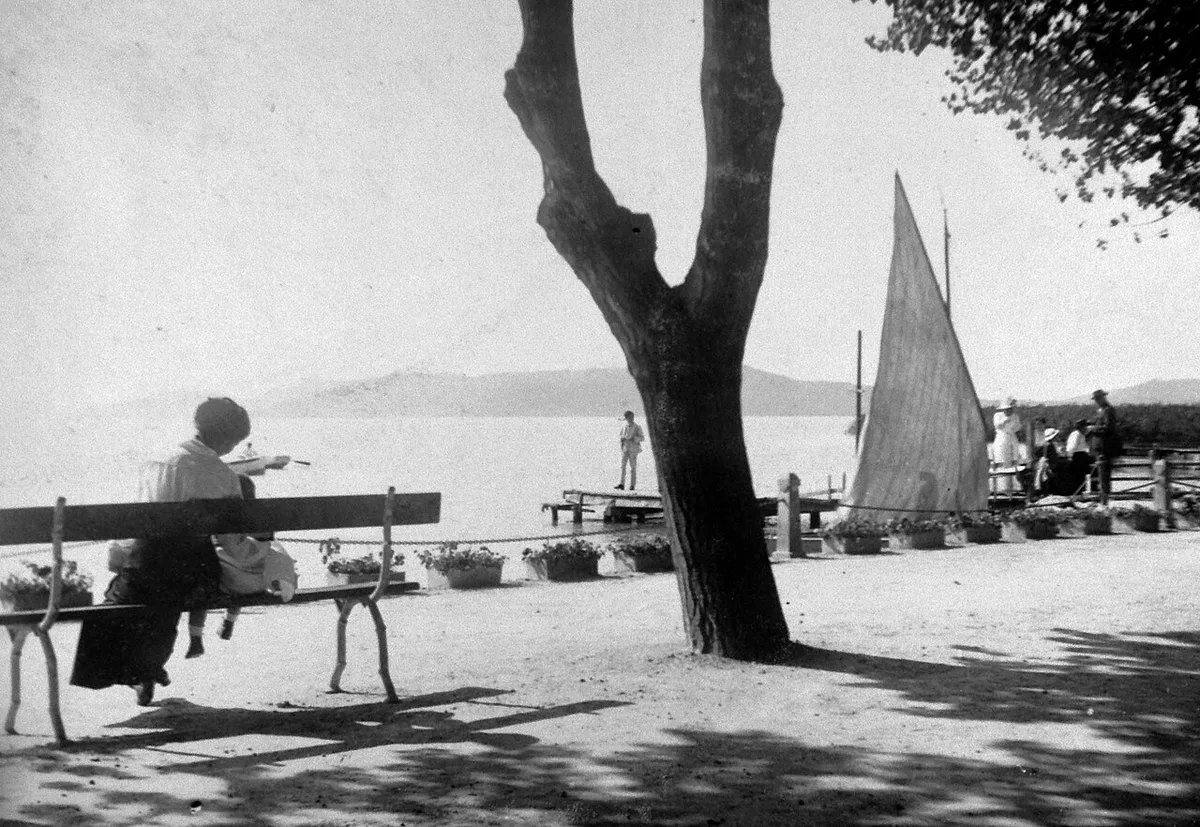
Lake Balaton swimming: south shore vs north shore
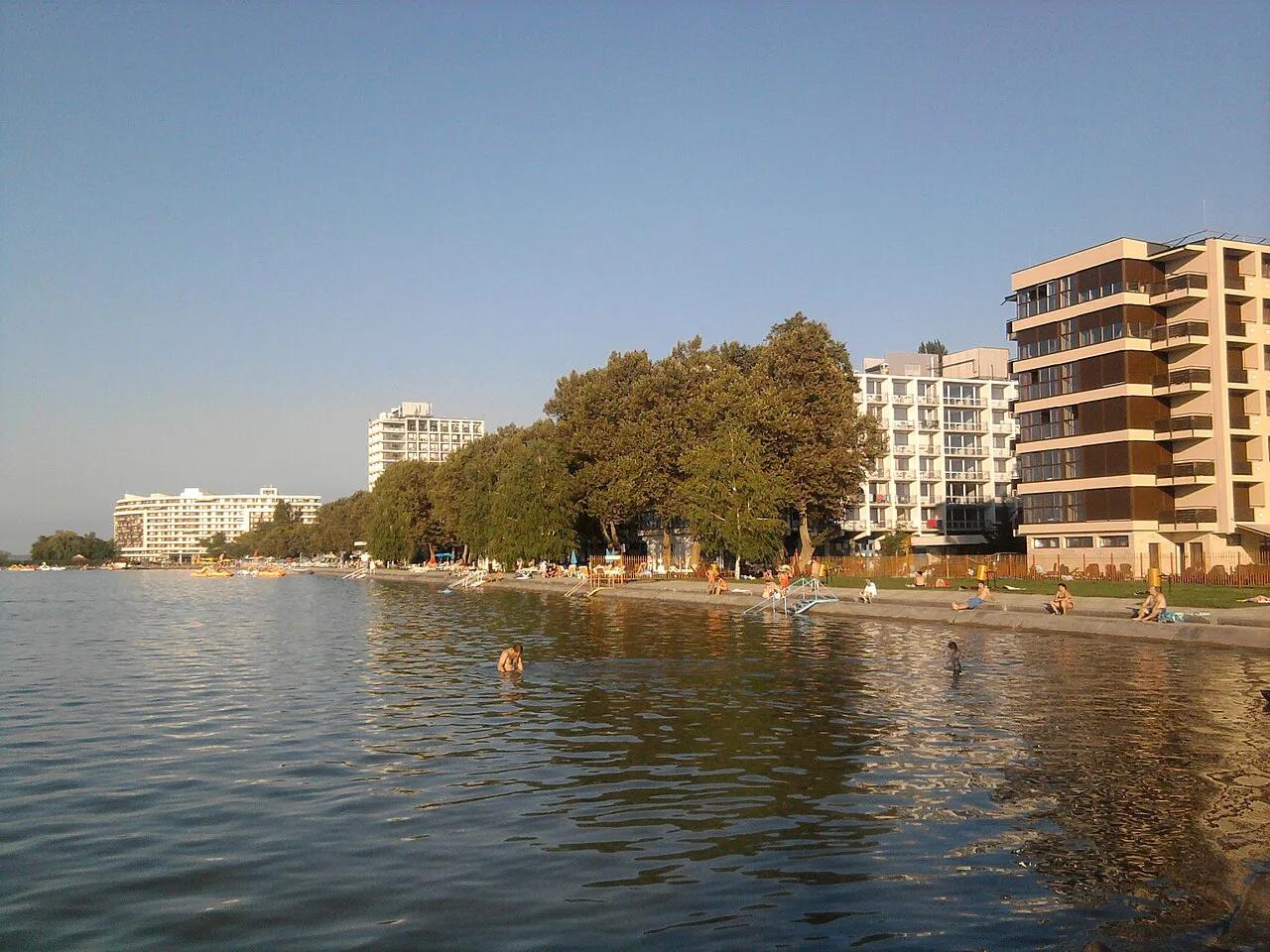
South-shore beaches are flat, sandy and very shallow. Children can walk about 100 m (roughly 330 ft) out and stay knee-deep. Shallow water also warms faster, and the beaches are wider with fuller facilities. North-shore beaches are smaller and hillier, backed by volcanic terrain. Use the lists below to match a shore to your trip.
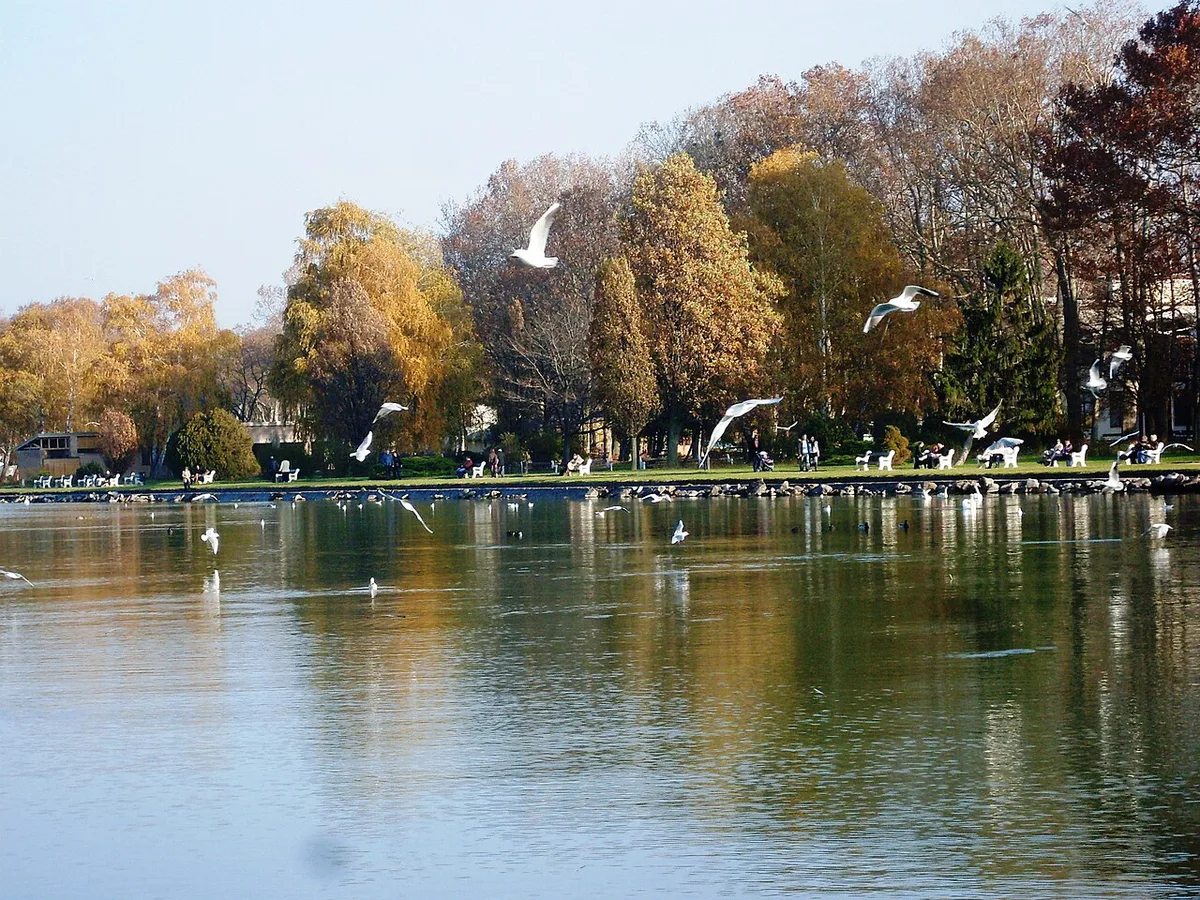
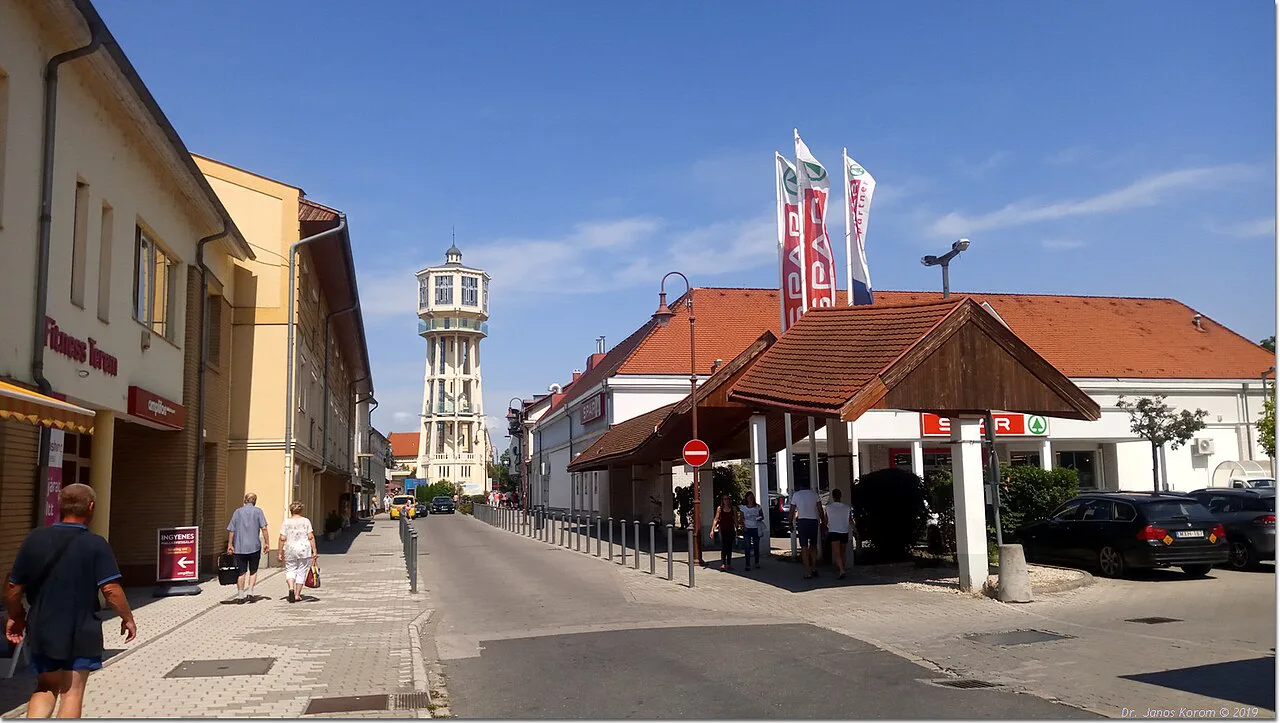
- South shore towns: Siófok, Balatonboglár and Zámárdi. Expect wide beaches, organized facilities, water parks and the busiest crowds in July and August.
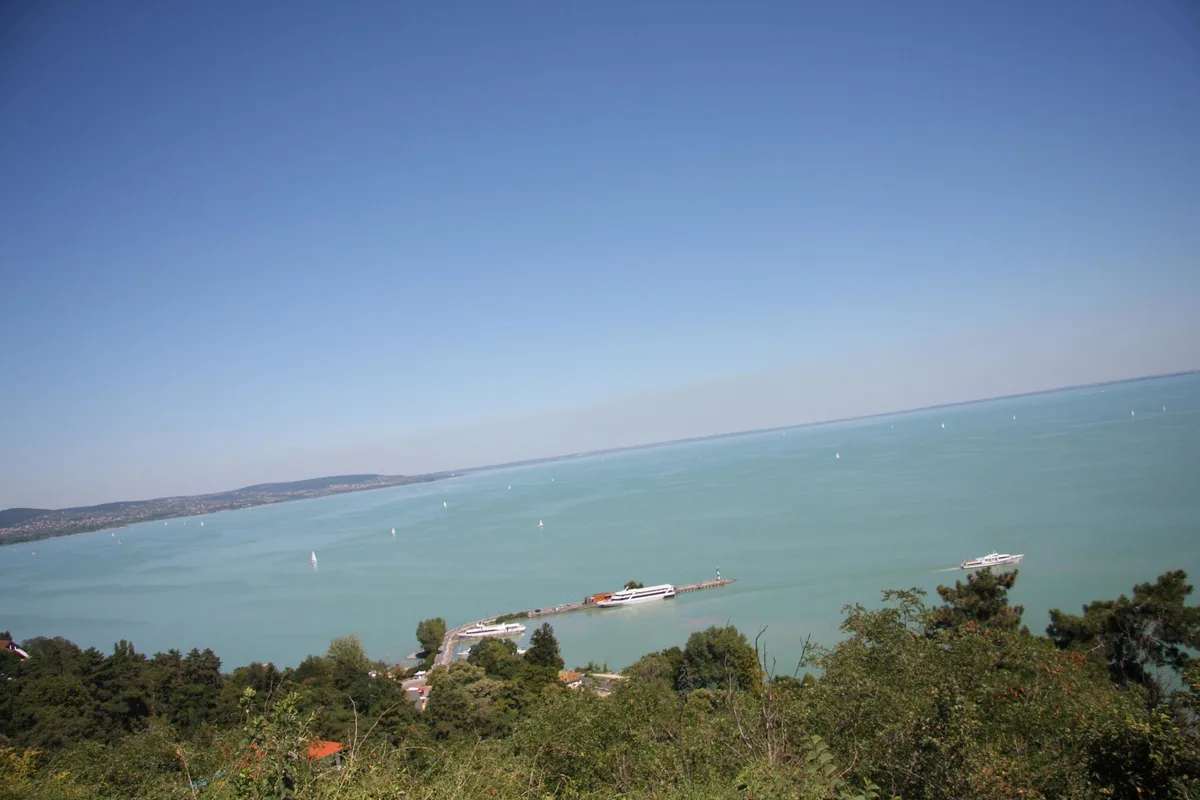
- North shore towns: Balatonfüred, Tihany and Badacsony. Expect smaller beaches, better views and a calmer feel. Tihany's Sajka beach is tiny and scenic.
- Best for families with children under about 8: the south shore, where shallow entry gives you room to supervise.
- Best for couples, wine and photography: the north shore, especially around Badacsony and Tihany.
- Best for nightlife plus swimming: Siófok. Skip the busiest beach strips if you want calm water time.
- Best for a quiet scenic swim: Tihany peninsula, where small beaches sit beneath the abbey hill.
Best time to swim: months and time of day
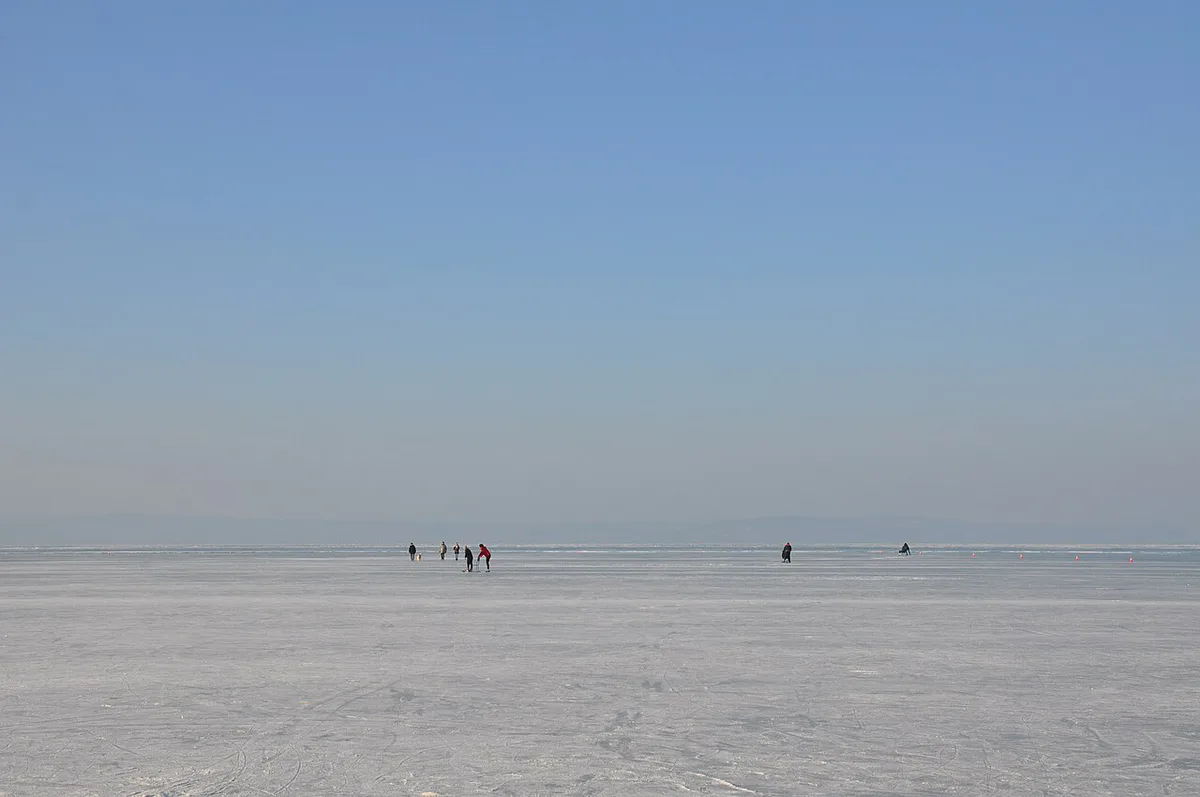
July and August bring the warmest water, at about 25–26°C. They also bring the biggest crowds and the highest lakefront accommodation prices. Early June and September are quieter, though water is cooler than at peak. Plan active swim time for the morning. Afternoon thunderstorms are reported from June to August, typically between 3 and 6 pm. The lake clears quickly once a storm passes. A simple plan works well: swim from 9 am to noon, eat lunch, then spend the afternoon on land.
- Early June and September: fewer people, cooler water, easier booking.
- July and August: warmest water, full beaches, peak prices.
- Mornings: calmer water and lower storm risk.
- 3–6 pm: storm window, so keep this block flexible.
Beach access, costs and what to bring
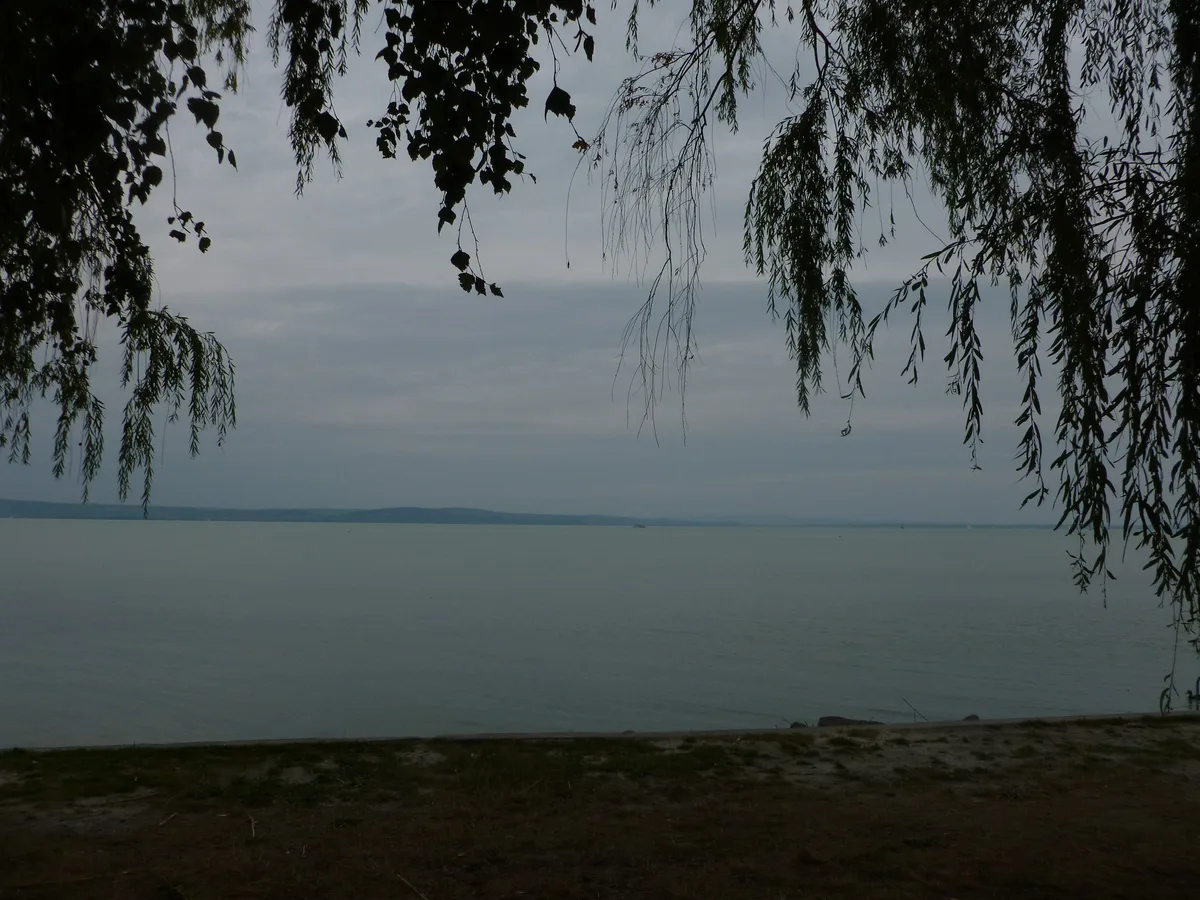
Many Balaton beaches are run as managed strands with an entrance fee. Some shoreline stretches are free. Fees and hours differ by operator and change by season, so check the municipality page before you go. Siófok's official tourism site is a starting point for that town. Pay in Hungarian forint (HUF). Small cafés and ice-cream counters can be cash-only, so carry some notes. For the western end, Keszthely has its own beach options and a town centre within reach of the water. Bring sun protection, a towel and water shoes if you dislike pebbly entries.
Swim safety and mistakes to avoid
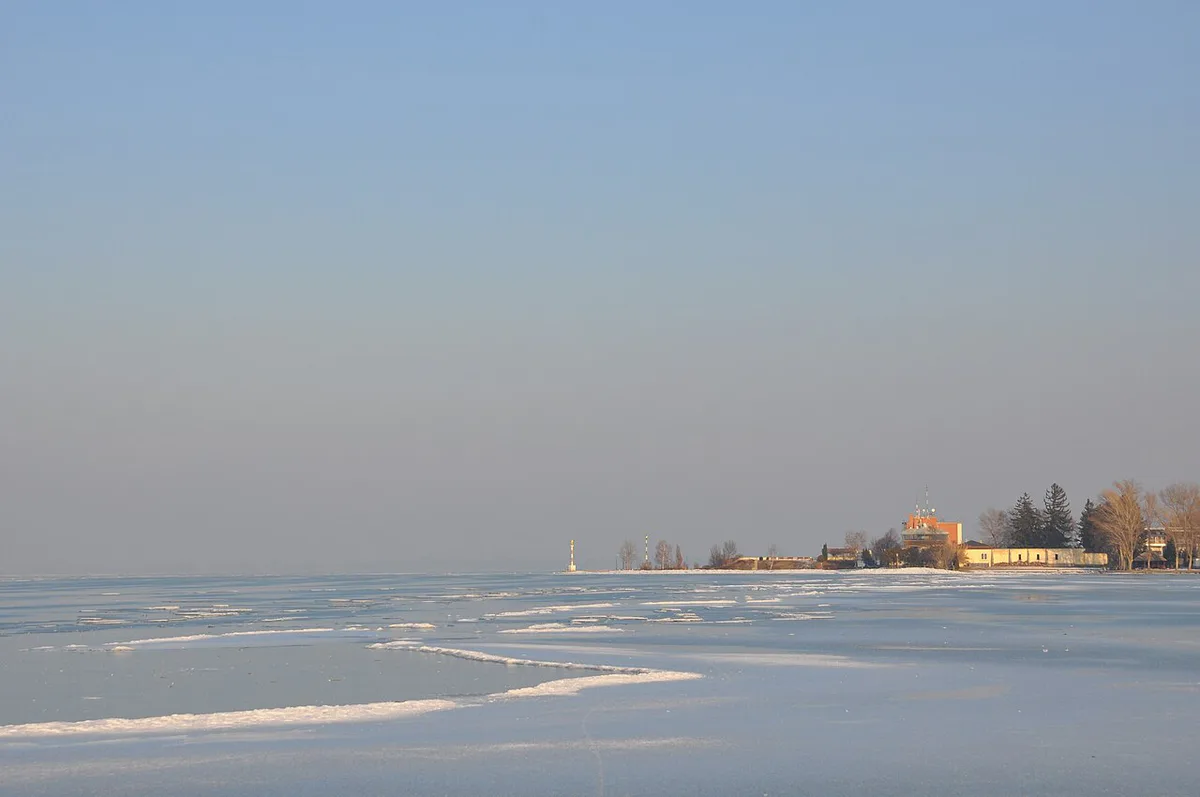
Balaton has no strong currents, and managed beaches post lifeguard notices. Still, most trouble comes from a few avoidable habits. The official Balaton storm warning service publishes current warnings. Check it on any day with a forecast of storms.
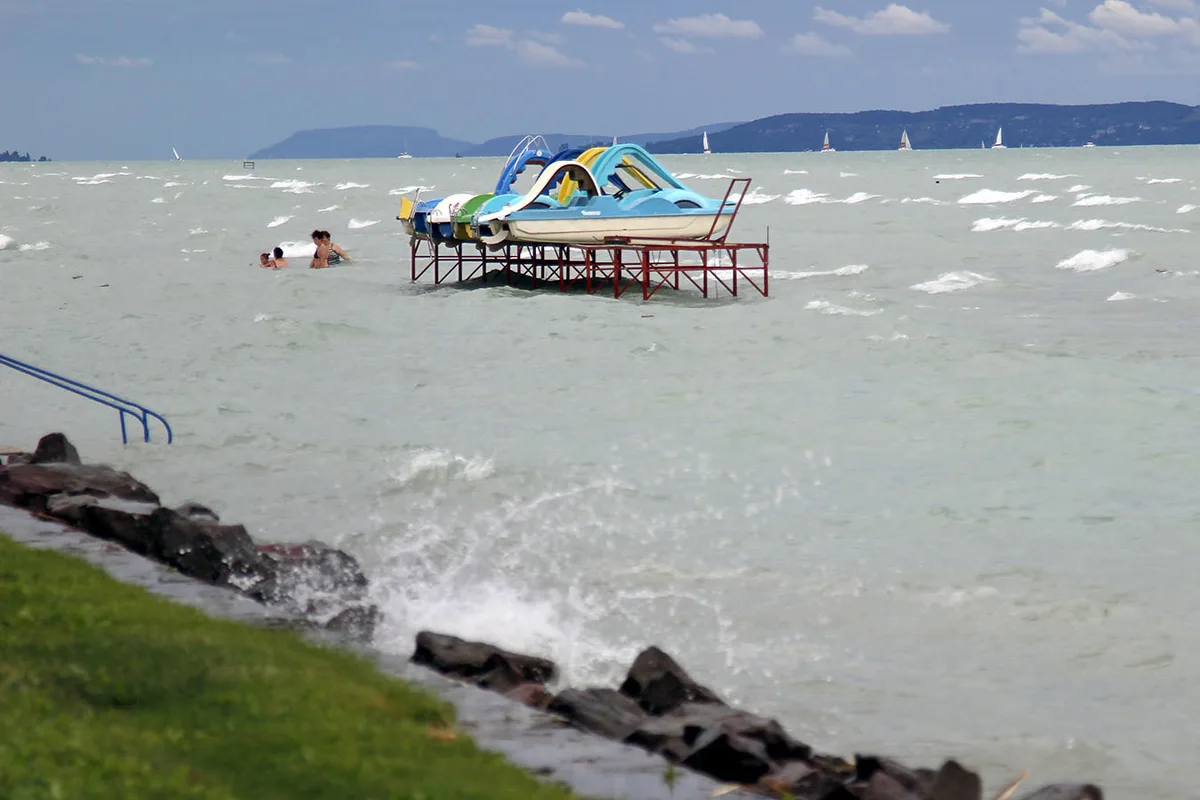
Storms usually build in the afternoon, typically between 3 and 6 pm, so check the official warning service before you head to the water.
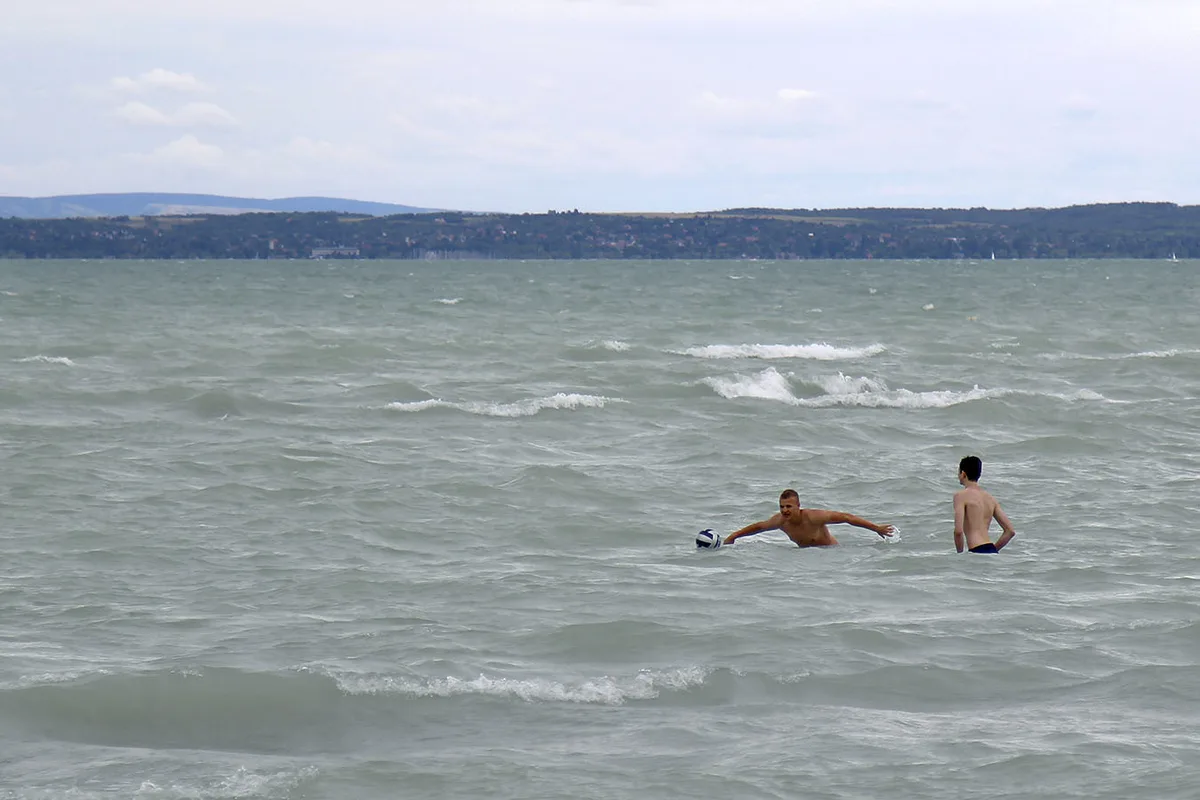
- Staying in the water when a storm warning goes up. Leave the lake at once and shelter on land.
- Skipping sun protection in shallow water. Reflection and long hours in knee-deep water add up fast.
- Letting children wander. A 100 m shallow walk-out can still end in deeper water, so keep them in reach.
- Ignoring posted notices. Read lifeguard flags and signs at each strand before you enter.
How to get to the water
Budapest Keleti to Siófok takes about 1 hour 15 minutes by train. Budapest to Balaton generally is quoted at about 1.5 hours. Check timetables and fares with MÁV Hungarian State Railways before travel. The south shore is easiest as a day trip from Budapest. The north shore suits an overnight stay, because moving between towns without a car takes planning. Within the lake area, a car or bicycle beats public transport for hopping between beaches. A 210 km cycle path circles the lake if you want a rest day off the water.
Swim plus: pairing a swim with the rest of your trip

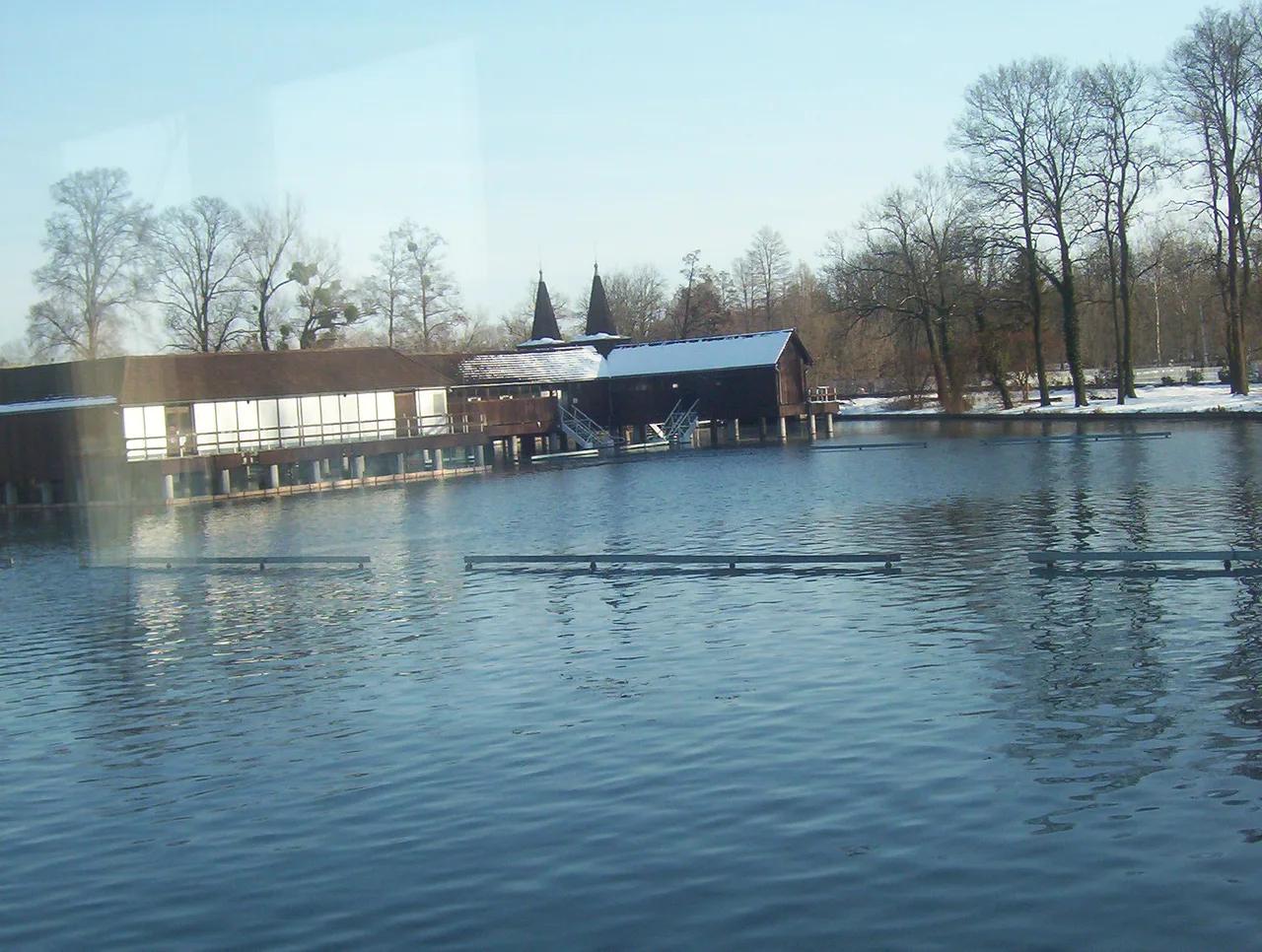
Tihany pairs naturally with swimming. Its Benedictine abbey is described on the abbey's official site, and its lavender fields bloom in June. Badacsony offers wine tasting on volcanic slopes. Local fogas (pike-perch) is the lake's signature dish. On storm days, switch to Hévíz thermal bathing, a very different kind of swim from the lake. Pair it with a morning at the south shore if you are based near Keszthely.
For serious swimmers: the Cross Swimming event
Lake Balaton Cross Swimming was held on 21 July 2024 between Révfülöp and Balatonboglár. It is an organized event for experienced swimmers. Casual visitors should not attempt a lake crossing on their own. Dates and registration change, so check with the organizer for current details.
Notes for your next lake trip
Optional updates to our lake guides.
You might also like
Continue reading
More guides you'll find useful